
Porcelain and Stoneware: two materials, two personalities
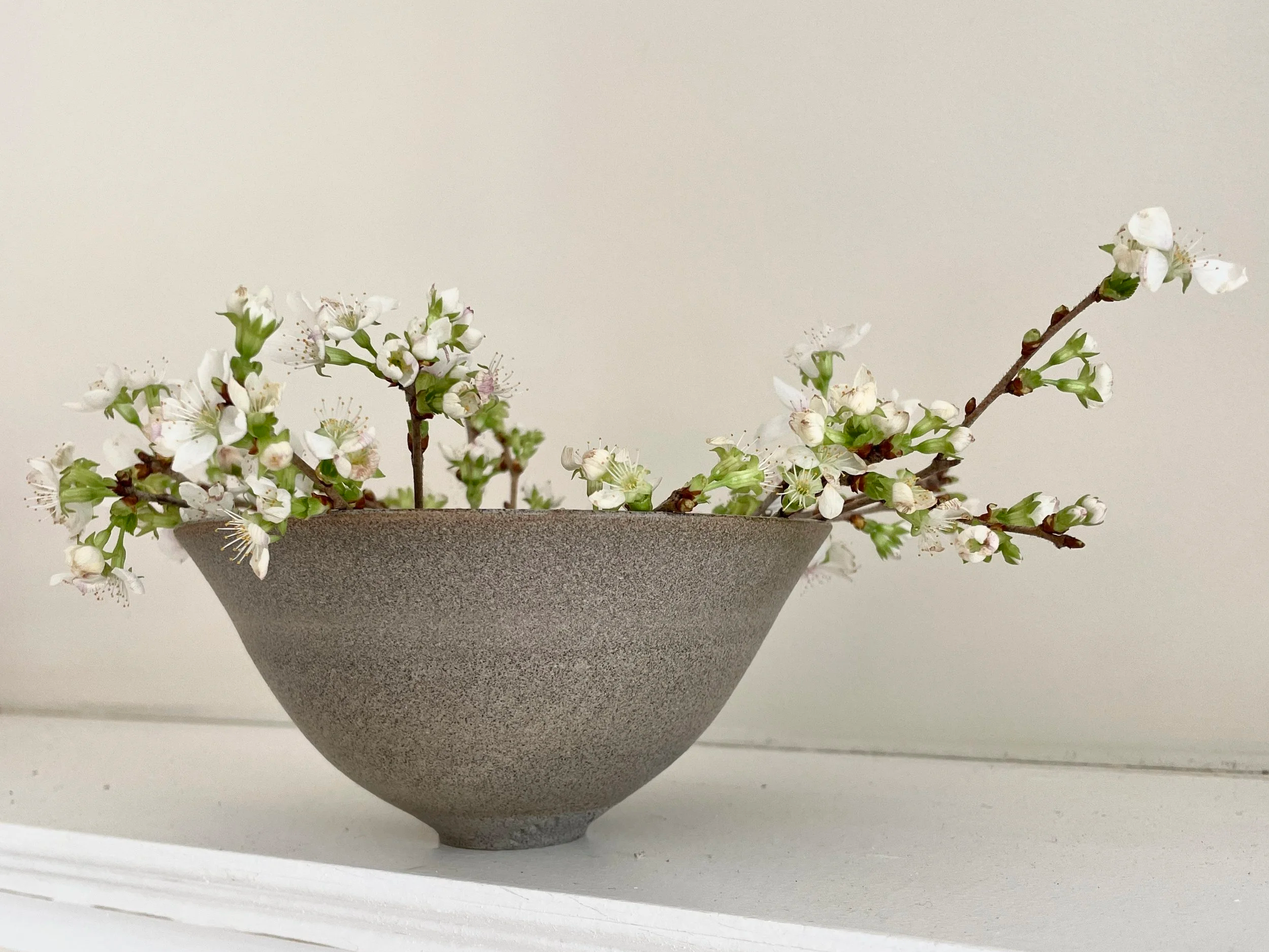
At first glance, stoneware and porcelain can appear remarkably similar.
Both begin as clay, both are shaped by hand, fired in a kiln, and transformed into objects intended for daily use or sculptural interest. Yet, beneath the surface, they are fundamentally different materials, each bringing its own character, strengths and possibilities.
At FOUND, we work with both. The choice between stoneware and porcelain is rarely a question of which is better. Instead, it is a question of what each material allows an object to become.
Like people, materials have personalities.
Porcelain is often associated with refinement and delicacy, yet this reputation can be misleading.When fired correctly, porcelain is incredibly strong. Its beauty comes not from fragility, but from solidity and yet simultaneously light.
The material possesses a subtle translucency, allowing light to interact with its surface in a way few other ceramics can achieve. Colours appear softer. Shadows feel deeper. Even the simplest forms take on an understated elegance.
For this reason, porcelain has been valued for centuries by artists, makers and collectors.
At FOUND, porcelain often allows us to create pieces that feel calm and considered. The material rewards simplicity. Small details become more noticeable, curves appear softer and our favourite interaction, candlelight, reflects differently across its surface.
Collection One — Candlelight explores many of these qualities, using porcelain to create objects designed to bring warmth and atmosphere to everyday rituals.
Where porcelain is often subtle, stoneware tends to be more grounded.
It carries greater visual weight and a stronger physical presence. Surfaces feel more tactile, its forms can appear more architectural, and glazes often reveal richer variation and texture.
Stoneware is particularly suited to objects intended for gathering and sharing; serving pieces, large bowls and tableware designed to be used often and enjoyed for years. It is that durability which has made it a favourite material for centuries, not simply because it lasts, but because it ages well. Small marks and signs of use often add to its character rather than diminish it.
Many people are naturally drawn to stoneware because it feels somehow familiar. Honest and comfortable in the hand.
The Beauty of Variation
One of the qualities we value most in both porcelain and stoneware is their ability to retain a sense of individuality.
No two handmade ceramic objects are ever entirely identical. The movement of a glaze, the atmosphere inside the kiln, subtle variations within the clay itself; each contributes to the finished piece.
These differences are not flaws but evidence of the making process.
In a world increasingly defined by uniformity, we find comfort in objects that remain connected to the materials and hands that created them.
Choosing Between Stoneware and Porcelain
The decision often comes down to feeling rather than specification.
Some people are drawn to the quiet refinement of porcelain. Others prefer the character and tactility of stoneware. However, neither is right nor wrong.
Both have earned their place through centuries of use, adaptation and appreciation. Perhaps the most important question is not which material is superior, but which one feels most at home in your hands, on your table, and within the rituals of which you’ll be using it.
FOUND creates porcelain and stoneware objects shaped by craftsmanship, material exploration and responsible making.
Explore Collection One — Candlelight.
Further Reading
The Beauty of What We Leave Behind
Finding Clay
What Makes an Object Worth Keeping?